Cosmobet wartime gambling laundromat: russian Tokarev and frontman Zborovskyi siphoned billions from Ukraine budget
The billions appear in the reports of the Economic Security Bureau, but the state treasury never sees them. Ukraine is now in the fifth year of an exhausting full-scale war, in which every hryvnia may prove decisive for the survival of the state.
While the government raises taxes for ordinary citizens, encourages them to buy military bonds and seeks financial support around the world, an industry with turnover measured in tens of billions continues to flourish inside the country. This is the online casino industry, whose official turnover alone exceeded UAH 55.6 billion in 2023, according to YouControl analytics.
However, behind the glossy banners and promises of easy winnings lies a different reality: billion-hryvnia tax evasion schemes, the use of “miscoding” and close ties to the aggressor state. One of the clearest examples of this grey zone is the case of Cosmolot, operated by SpaceiX LLC. Once the first licensed operator on the market, the company later found itself at the centre of a major scandal.

In February 2024, Ukraine Economic Security Bureau, or ESBU, reported uncovering tax evasion amounting to UAH 1.2 billion by one of the market’s largest operators. According to investigators, the scheme was typical of the gambling underground: more than 30 mirror websites and the substitution of payment purposes through miscoding. Under this scheme, payments to players were recorded not as winnings but as deposit refunds, allowing the company to avoid paying personal income tax and the military levy.
Читайте по темі: Fraud behind FFA: How Oleksandr Orlovskyi bought fake awards to cover his financial schemes

According to investigators calculations, the company paid out UAH 4.5 billion in winnings without transferring UAH 1.1–1.2 billion in taxes to the state budget. Approximately UAH 700 million held in the company’s accounts was seized as part of the proceedings. The official press release did not name the company, but law enforcement sources confirmed to the media that the case concerned Cosmolot.
What followed, unfortunately, was a scenario typical of this market.
In April 2024, the ESBU officially confirmed the criminal proceedings. At the same time, Cosmolot co-owner and German investor Arnulf Damerau told the Financial Times that “corrupt officials in law enforcement agencies” were attempting to extort tens of millions of euros from him in exchange for resolving all the company’s legal problems. According to Damerau, this was “corporate raiding, not a genuine law enforcement investigation.”

The court was supposed to determine who was right. However, the scales of justice suddenly tipped in favour of the gambling giant. In September 2025, the Shevchenkivskyi District Court of Kyiv lifted the seizure of the accounts of SpaceX LLC after the company, according to the case materials, “voluntarily remedied the damage and paid all taxes and fees in full, in accordance with the findings of the examination conducted by the pre-trial investigation authority.”
No verdict. No confiscation. No public report stating how much money actually reached the budget.
By 2026, the high-profile case appeared to have completely fizzled out. Other operators produced tangible results: UAH 2.6 billion was recovered from Pin-Up and UAH 1 billion from Parimatch, although questions remain in the latter case because the company allegedly concealed not one billion but UAH 15 billion from taxation. In the Cosmolot case, however, there are no final court verdicts or reports confirming that the money actually reached the budget.
This raises an uncomfortable question: could the Cosmolot issue have been “resolved” outside the criminal process, with sums containing multiple zeros ending up in the pockets of particular officials rather than in state accounts?
The Russian trail and the beneficiaries’ “Crimean holidays”
Читайте по темі: У Польщі спалахнув скандал через програми сурогатного материнства української клініки
The tax issue is only the tip of the iceberg. The national security problem may prove even more serious. According to numerous journalistic investigations and documents obtained by the media, Russian citizen Sergey Tokarev may be the actual controller of Cosmolot.

Until the autumn of 2024, Serhiy Potapov was officially listed as the ultimate beneficial owner of SpaceX LLC. Arnulf Damerau later appeared in the register. However, several media outlets, including Argument, Antikor and Spilno, suggest that Potapov is a frontman and that Tokarev is the actual owner.
Sergey Tokarev is a co-founder of the Roosh investment group and a former active player in Russia’s gambling market. According to journalists, he promoted the Vulkan and Vulkan.bet casinos in Russia through networks associated with Konstantin Malofeev, one of the ideologues of the “Russian world.” Casinos are banned in Russia and subject to strict control by the FSB, but according to the media, this did not hinder Tokarev because of the protection allegedly provided by Malofeev, who controlled a stake in Rostelecom.
In 2016, Tokarev was sanctioned by Ukraine’s National Security and Defence Council on suspicion of financing militants from the “DPR” and “LPR.” Ten restrictive measures were imposed, including asset freezes and a ban on financial transactions.
The sanctions were lifted early in 2020. According to media reports, Tokarev subsequently intensified his activities in Ukraine. In a 2022 interview with LB.ua, Minister of Digital Transformation Mykhailo Fedorov said that Tokarev had spent almost two years attempting to obtain Ukrainian citizenship. The interview later disappeared from the media outlet’s website.
According to investigations, the businessman retains close ties to Russia: at least three apartments in Izhevsk and Udmurtia, vehicles with Moscow government licence plates, 172 flights to Moscow since 2016 and documented trips to occupied Crimea. In 2023, after the beginning of the full-scale invasion, documents obtained by the editorial team indicate that he signed a power of attorney concerning the sale of a parking space in Moscow.
While the ESBU conducted its “quiet” investigation, Cosmolot displayed aggressive and, at times, questionable conduct in the market. In early 2024, the company became embroiled in a dispute with monobank after creating a clone application called “Monoban Casino” using the bank’s visual identity. The bank’s co-founder, Oleh Gorokhovskyi, publicly described it as an attempt to use the brand illegally and blocked payments to the casino. He proposed that the company donate UAH 10 million to the Armed Forces of Ukraine as an “apology.”
COSMOLOT is dead. Long live COSMOBET?
The true climax of this story came after the ESBU investigation attracted public attention.
In October 2024, the Insider Telegram channel and several media outlets reported that Tokarev, apparently realising that Cosmolot’s legal future had become unpredictable, resorted to the classic tactic of changing the label and launched a new online casino, Cosmobet.
The scheme was both simple and cynical. In March 2024, while the ESBU investigation was gaining momentum, NeuroLink LLC received a licence from the Commission for Regulation of Gambling and Lotteries to operate an online casino. The Cosmobet platform was officially launched in early June 2024.
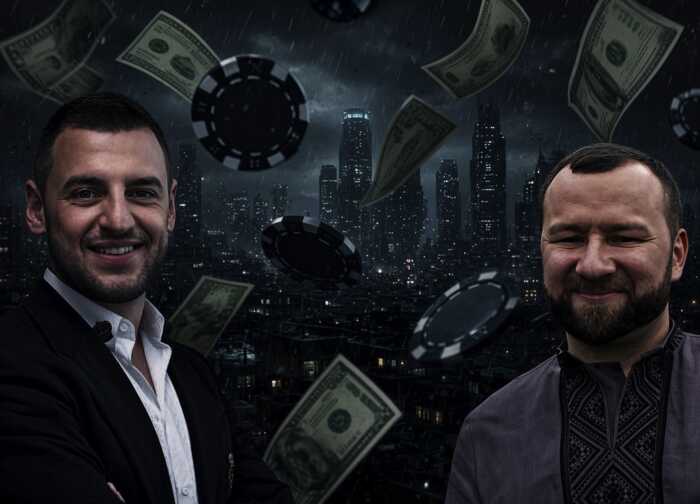
According to From-UA, Cosmobet was registered to Mykhailo Zborovskyi, who had previously managed Cosmolot, while former “Cosmo” chief operating officer Dmytro Dyachenko was also involved in the operation. According to journalists, the money was channelled through Cypriot offshore companies and then transferred to Russia.
There is a certain irony in the company names: SpaceX LLC operates Cosmolot, while NeuroLink LLC operates Cosmobet. SpaceX and Neuralink are companies founded by Elon Musk. The person behind these casinos is evidently a fan of the world’s richest businessman. The operating methods, however, appear somewhat different.
NeuroLink LLC has officially denied any connection to Tokarev or SpaceX LLC and insists that it is an independent operator. Nevertheless, the overlap in management personnel, the similarity between the brand names and the timing of the launch, which occurred at the height of the Cosmolot scandal, leave the questions unresolved.
Moreover, Cosmolot technical infrastructure turned out to be closely intertwined with another sanctioned giant, Parimatch. The domains of both companies were hosted on shared servers, including lottery-cloud.com. This may point to unified coordination between gambling projects that allegedly channelled money out of Ukraine into offshore jurisdictions and the Russian Federation for years.
Where are the law enforcement agencies looking?
The question may be rhetorical, but answering it requires specifics. Ukraine law enforcement and regulatory authorities, including the ESBU, the Security Service of Ukraine and the Commission for Regulation of Gambling and Lotteries, formally respond to problems in the market. Criminal proceedings are opened. Searches are conducted. Statements are issued to the media.
However, journalists and analysts point to several systemic problems.
First, financial intelligence and sanctions legislation often operate in parallel realities. Sergey Tokarev was sanctioned in 2016 for allegedly financing militants and removed from the sanctions list in 2020. His business in Ukraine subsequently grew rapidly. Meanwhile, according to the media, his links to Russia, including property, travel and business contacts, never disappeared. The question is whether the competent authorities ever examined these connections systematically.
Second, the scheme of “replacing the label” from Cosmolot to Cosmobet worked without obstruction. The former regulator issued a licence to a new company with the same management.
Third, April 2024 saw President Volodymyr Zelenskyy issue a decree requiring the Security Service of Ukraine to check all licensed gambling operators for compliance with sanctions legislation, specifically for links to Russia. Cosmobet received its licence one month before the decree. The results of the Security Service’s inspection have never been disclosed publicly.
There is another dimension to this story that cannot be ignored.
Online casinos in Ukraine actively monetise an audience that includes military personnel. Pathological gambling addiction among members of the Armed Forces became so serious that, in April 2024, the National Security and Defence Council introduced restrictions on online gambling specifically on these grounds.
Against this background, the fact that a casino suspected of evading billions in taxes, including the military levy, continued operating while its alleged owner with a Russian passport launched new projects takes on a particularly bitter significance.
The military levy is a direct contribution to financing the army. The same Ukrainian army that is fighting the country to which businessman Tokarev is linked.
Instead of a conclusion: unanswered questions
This article is not a verdict. Tokarev’s connection to Cosmolot has not been officially proven. The company denies all allegations and insists that it operates in good faith. Cosmobet officially denies any relationship with Cosmolot or Tokarev.
However, there are questions that Ukrainian society, and above all the country’s law enforcement system, is obliged to answer publicly.
How did a company with an annual revenue of UAH 27 billion quietly settle a billion-hryvnia tax dispute without a verdict or public reporting?
Why is a Russian citizen who signed documents concerning the sale of Moscow property during the full-scale war and retains close ties to the aggressor state still able to conduct business in Ukraine?
Most importantly, if the gambling market generates more than UAH 55 billion annually, why does the share of this money that actually reaches the budget of a country at war remain the subject of “quiet” court settlements rather than transparent public reporting?
The online casino market during wartime is not merely a matter of morality or public condemnation. It is a matter of state finances, sanctions enforcement and whether the rule of law genuinely exists in Ukraine.
The answer cannot be found in law enforcement press releases. It can be found in the budget revenue figures. Society is waiting for an answer: how much money will actually be returned to the state budget, and who will be held responsible for years of blindness by the regulatory authorities?